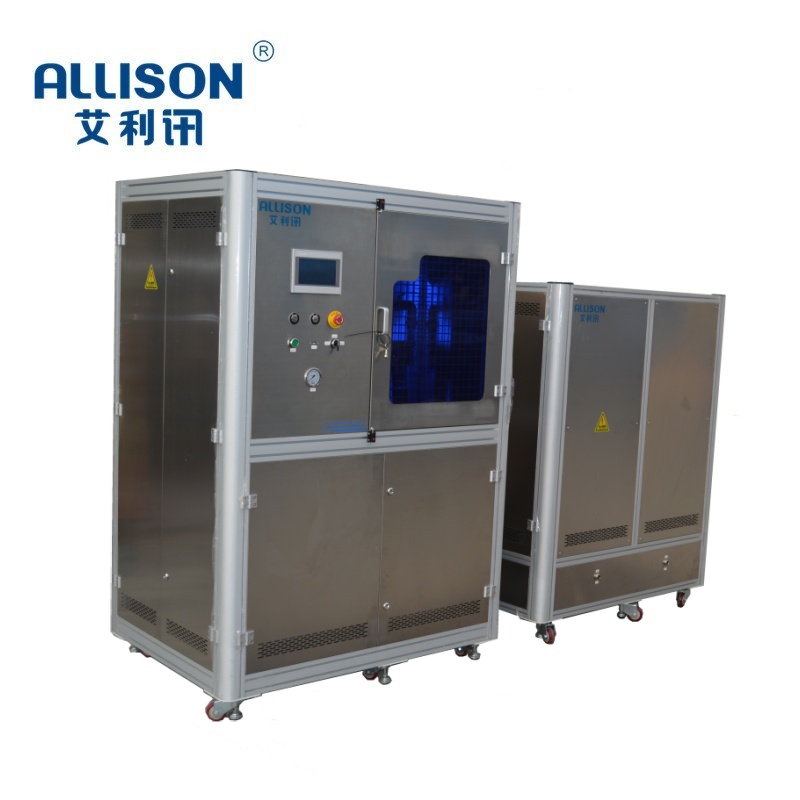
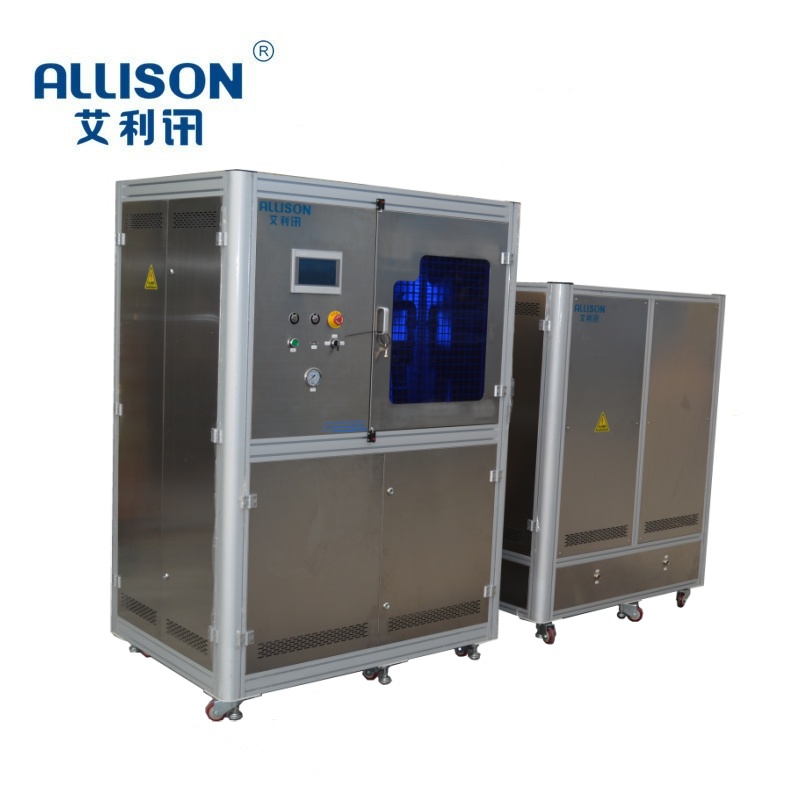
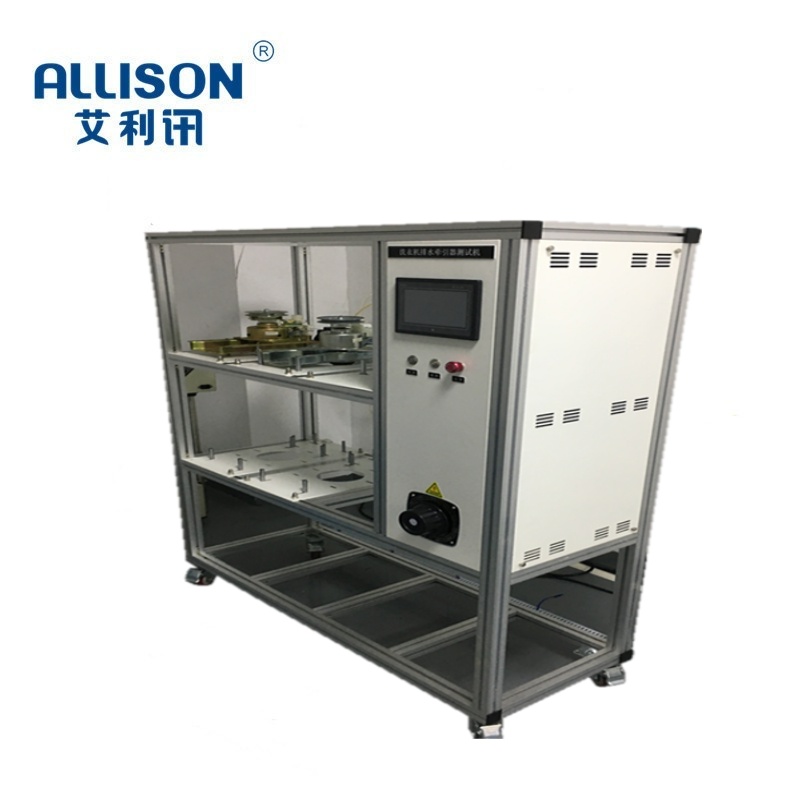
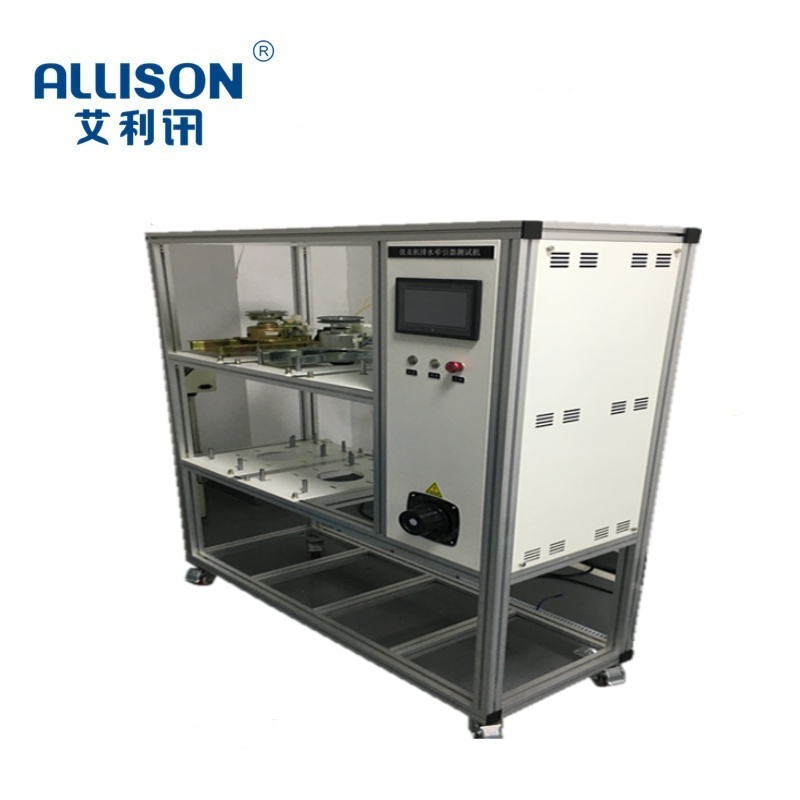
This steam jetting machine is specifically designed to meet the testing requirements of ISO 16925 (Paints and Varnishes - Determination of Resistance of Coatings to High-Pressure Water Jetting). It can simulate a high-pressure steam jetting environment and conduct jetting resistance tests on various coating samples. The equipment features a reasonable structure, easy operation, and precise adjustment of various parameters, ensuring the accuracy and reliability of test data. Equipped with specialized test fixtures inside, it allows for multi-dimensional adjustment, precise positioning of the jetting point and sample position, and fully complies with the requirements of ISO 16925 testing for parameters such as jetting angle and distance. The specific adjustment parameters are as follows:
- Adjustment of spray point front and rear: The travel range is 0-300mm, and manual adjustment is adopted, which is convenient to operate and allows precise control of the front and rear distance between the spray point and the sample.
- Left-right adjustment of the sample testing platform: with a travel range of 0-800mm, it adopts servo adjustment mode, featuring high adjustment accuracy, enabling precise positioning of the sample's left and right positions.
- Sample fixation method: The sample testing platform is equipped with 0-degree and 45-degree fixture plates, allowing for the selection of sample placement angles according to testing requirements and adapting to different testing scenarios.
- Spray point vertical adjustment: The distance can range from 0 to 400mm, and manual adjustment is used to flexibly adjust the height position of the spray point.
- Spray point angle adjustment: The adjustment range is 0-±90 degrees, using manual adjustment. It allows for steam spray testing at different angles, fully covering the testing angle range required by the standard.
- Pointing function: Equipped with an infrared pointing device, it can quickly and accurately locate the spraying point, ensuring that the spraying position perfectly corresponds to the test area of the sample, thereby enhancing test accuracy.
- Sample fixation: A rapid clamping method is employed to quickly secure the sample, enhancing testing efficiency while ensuring that the sample remains secure and does not shift during the testing process.







 Online
 Tel
Tel Contact
 Home
Home