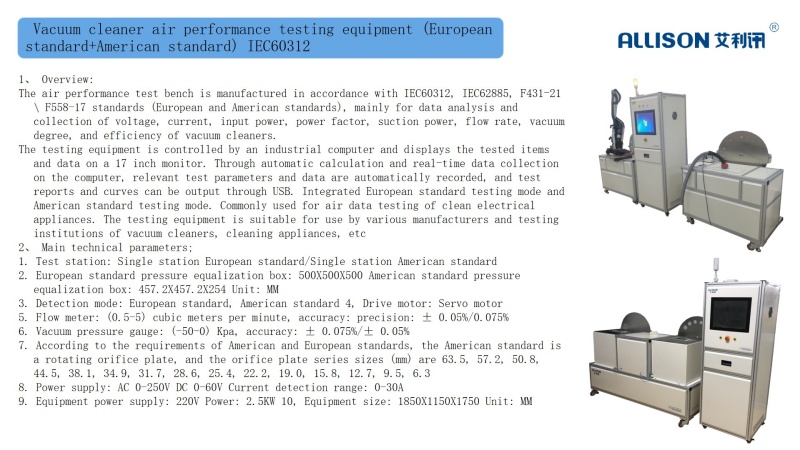
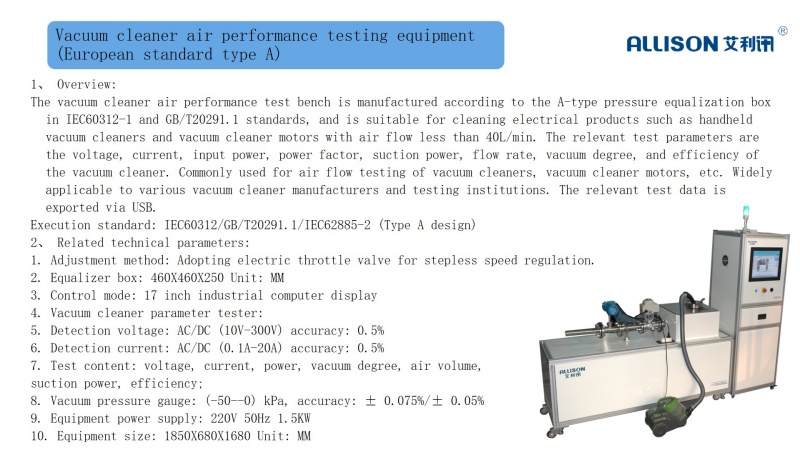
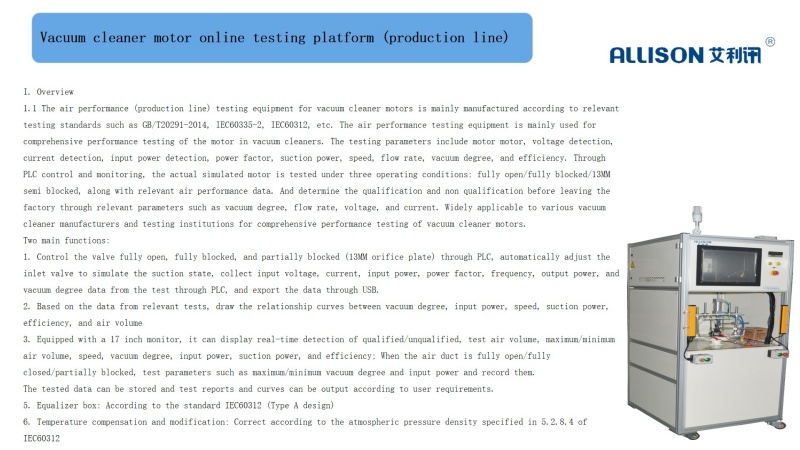
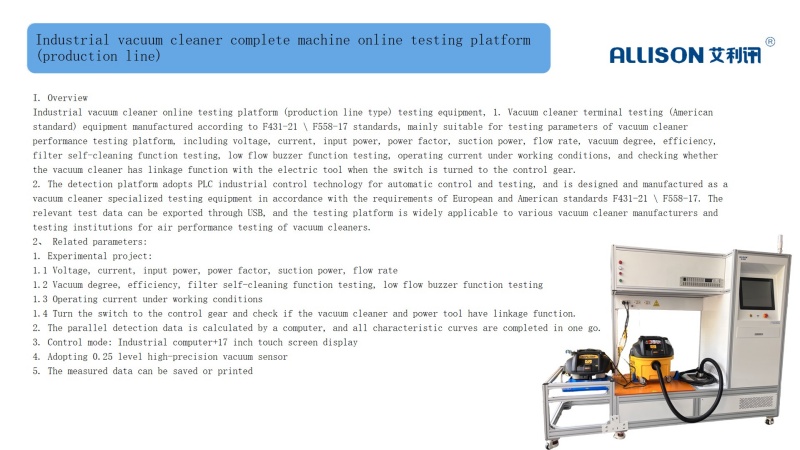
1. Full condition testing of air volume vacuum characteristic curve
The original data collection was only single point, and the standard required complete gradient testing: gradually plugging the suction port, continuously recording the vacuum degree and air flow rate, and generating a complete performance characteristic curve, which is a key requirement for IEC and American standards to determine the operating range of vacuum cleaners; It can export curve documents and is also a standard extension function of the device.
2. Energy efficiency grading test under rated operating conditions
1. Air energy efficiency: Accurate calculation of suction power/motor input power, matched with IEC62885 vacuum cleaner energy efficiency level classification;
2. The overall energy efficiency of the machine is calculated by distinguishing between three operating conditions: no-load, rated load, and rated blockage.
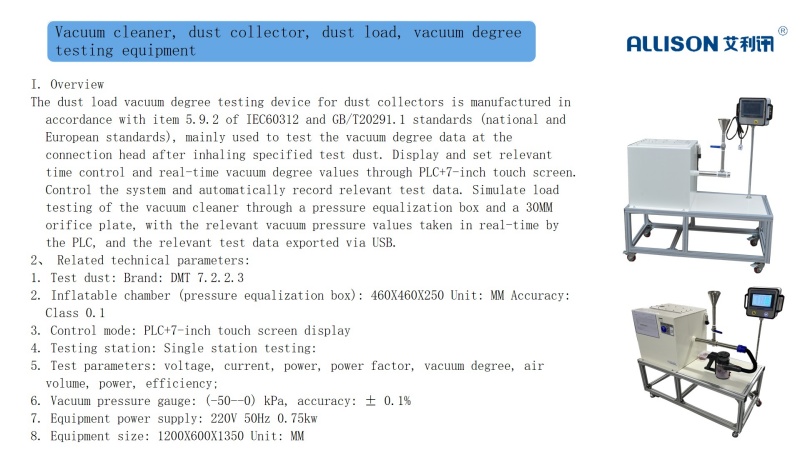
3. Dust load attenuation test
Add standard test dust to the vacuum chamber, simulate actual dust accumulation, and continuously test:
The decay rate of vacuum degree, flow rate, input power variation, and continuous working stability, as well as the determination of the impact of filter blockage on the performance of vacuum cleaners, are essential items for mass production quality inspection of cleaning appliances.









 Online
 Tel
Tel Contact
 Home
Home