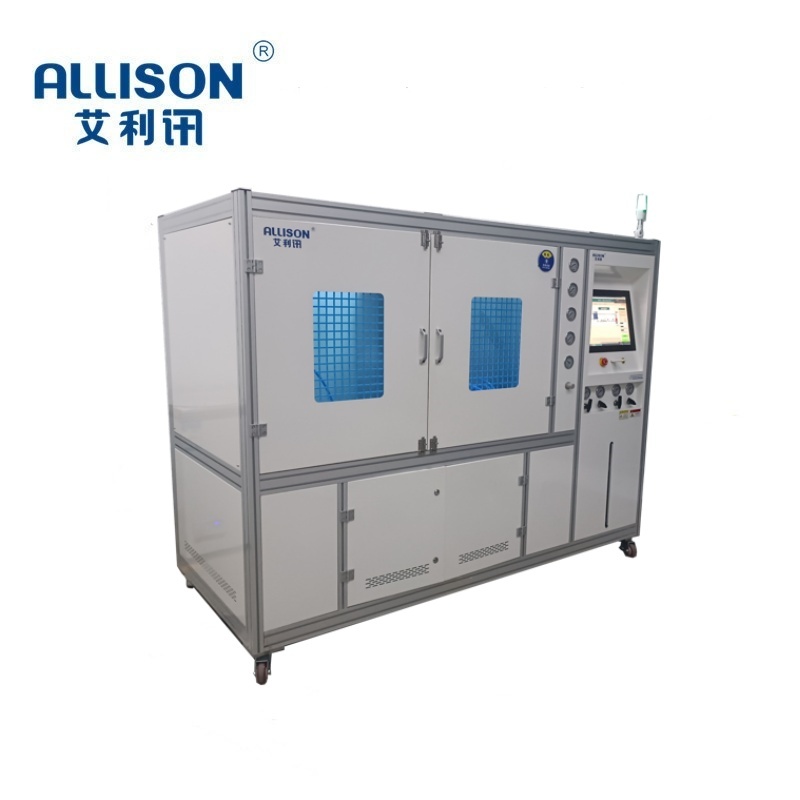
Control System
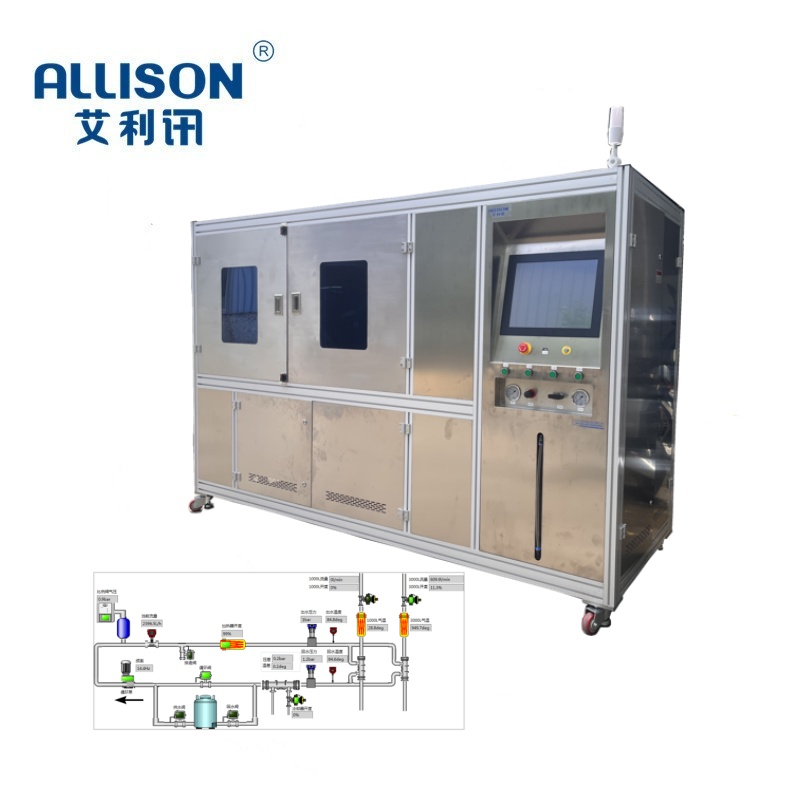
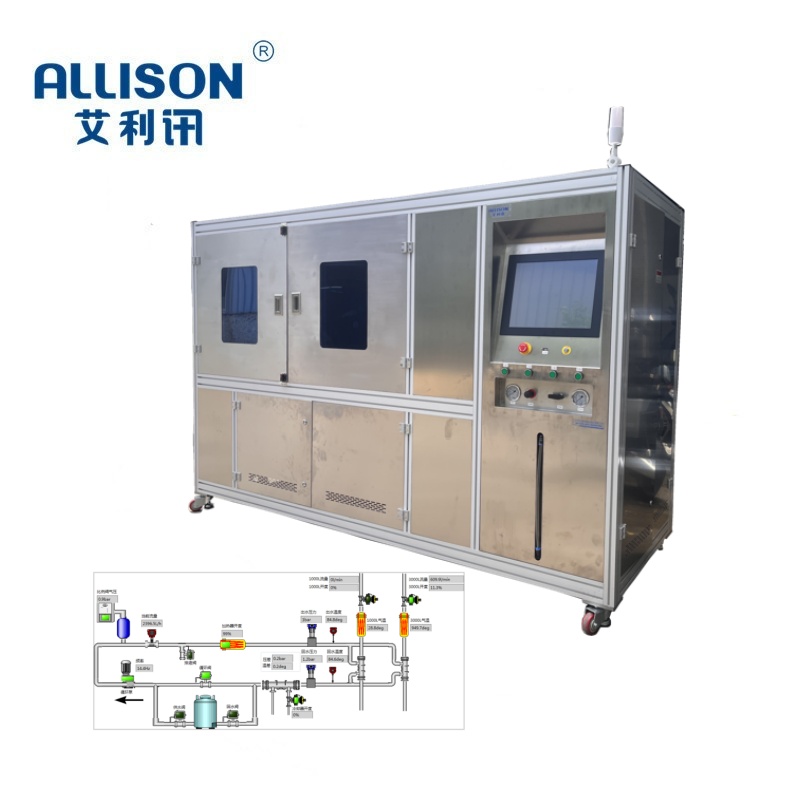
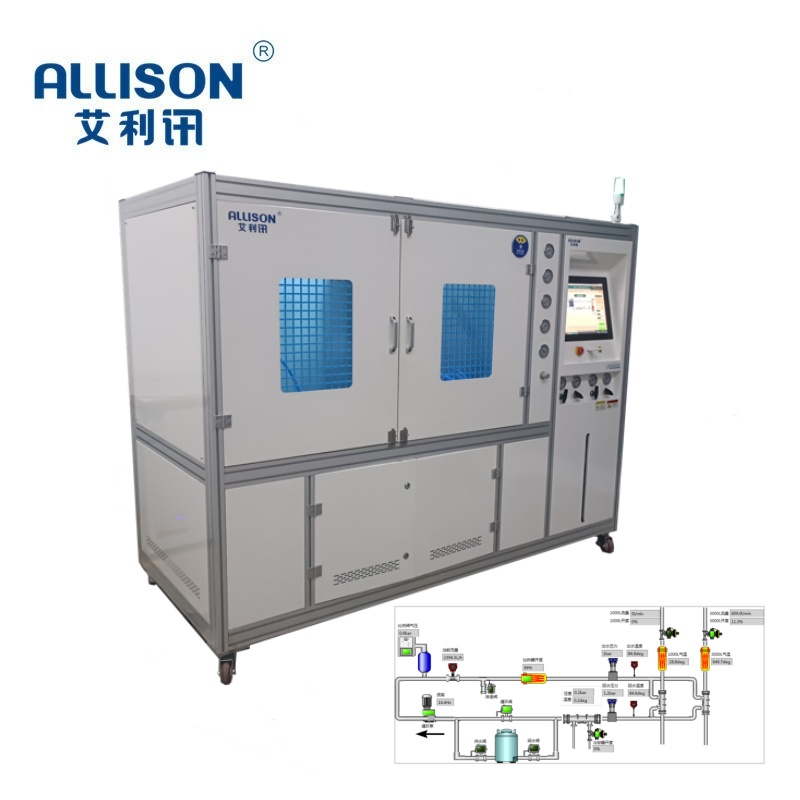
PLC+upper computer monitoring software, automatic PID temperature control, flow control, pressure control; Automatically collect and calculate thermal efficiency, and generate test reports.
5 Experimental operation process
1. Check the pipelines, sensors, and add coolant to the reservoir; Open the bypass circulation valve and close the test piece branch valve.
2. Start the circulation pump, activate the heater, self circulate, and preheat the coolant to the set inlet temperature.
3. Close the circulation bypass valve and open the coolant inlet and outlet valves of the EGR test piece; Activate EGR gas path heating and introduce simulated high-temperature exhaust gas.
4. The system automatically adjusts until all parameters reach the set values and stabilizes for 60 seconds.
5. Automatically record coolant flow rate, inlet and outlet temperature and pressure; EGR gas flow rate, inlet and outlet temperature and pressure; Automatically calculate thermal efficiency, heat dissipation, and gas side pressure difference.
6. Switch to the next set of set parameters and repeat steady-state acquisition.
7. Stop gas path heating and cool down; Stop the circulating pump; Open the drain valve to empty the medium.
Data recording and experimental report. Coolant: flow rate, inlet temperature, outlet temperature, inlet pressure, outlet pressure. EGR exhaust gas: gas flow rate, inlet temperature, outlet temperature, inlet pressure, outlet pressure. Calculation results: thermal efficiency η, total heat transfer Q, gas side pressure loss Δ P_gas, liquid side pressure loss Δ P_liquid







 Online
 Tel
Tel Contact
 Home
Home