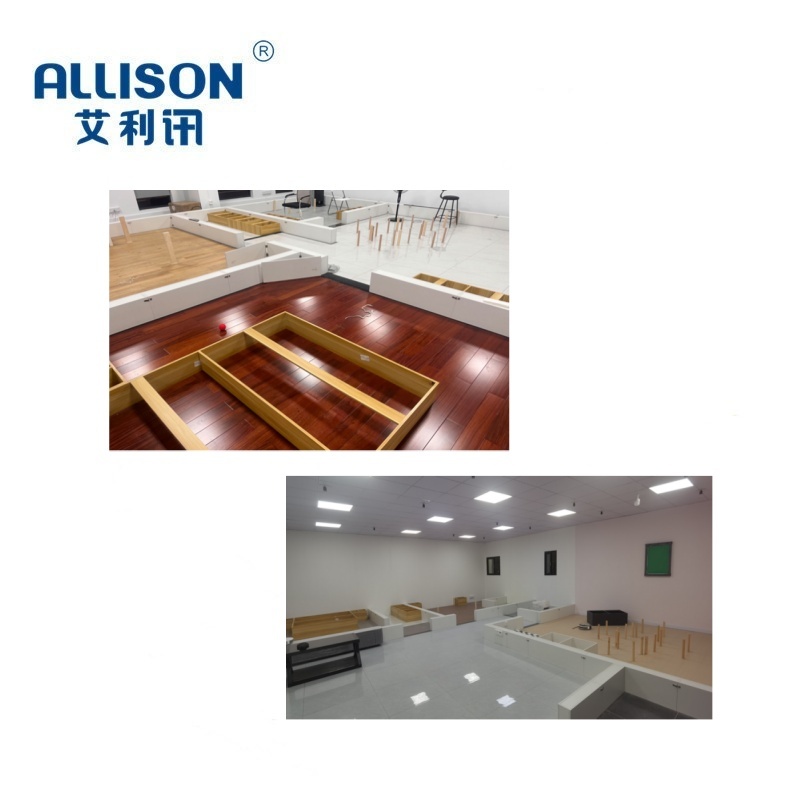
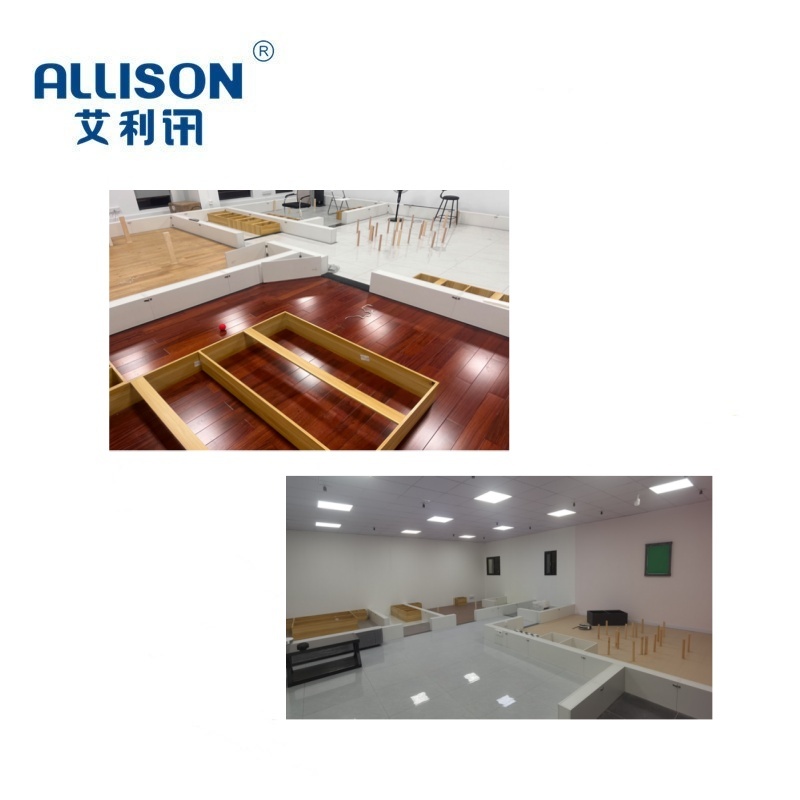
1. Applicable to the latest IEC/ASTM 62855-7 standard, IEC 629629, GB/T 34454-2017, QB/T483-2023 standards, T/CAS-2019, T/AIIA 001-2020 and other related standards for routine multi room coverage testing, single room coverage testing, night coverage testing, navigation performance testing, and mapping ability testing. High definition cameras are distributed in each testing area for actual monitoring and data acquisition. The control system is a trajectory tracking control system on the upper computer, which is combined with a positioning radar system inside the room to ensure the accuracy of machine positioning and testing data under physical furniture. Record and calculate the coverage of relevant test data for the XY coordinate positioning, angle, obstacle avoidance, and other parameters of the cleaning robot in the testing area, including the entire running trajectory, movement speed, rotation speed, obstacle avoidance markers, and obstacle avoidance distance. The relevant test data system automatically records and can export data through USB to quickly generate reports with just one click. The testing system supports related testing playback functions, product names, product numbers, testing environment temperature, humidity, atmospheric pressure data, etc. The main components of the control system include multi room testing room, single room testing room, high-definition camera, laser wireless receiver auxiliary station, trajectory tracking and positioning software, simulated furniture, identification poles, and simulated furniture in T/AIIA 001-2020. Single room/multi room coverage calculation and reachable area cleaning capability test conducted in designated rooms according to reference testing standards through the control system. By testing the space of the room, the accumulated coverage rate and multiple coverage rate tests of the tested sweeping robot over a period of time are conducted.
1.2. The number of overhead cameras is planned according to the room layout and testing accuracy requirements, and the testing area is visually displayed, tracked, and positioned with relevant angles and XY coordinates. Through the internal layout of the testing room, a large wide-angle high-definition visual camera and a self-developed visual tracking object motion trajectory system are installed on the top to monitor the real-time position coordinates of the moving object. The coordinate address is transmitted to the upper computer system, and the coordinate data collected by the camera is further processed with algorithms and embedded deep learning, combined with high-definition visual cameras. Finally restore the actual motion trajectory of the moving object and simulate and display the trajectory.
1.3. Visual position measurement: Position resolution ≤ 3cm, position accuracy ≤ 5cm, angle resolution ≤ 3 °, angle angle ≤ 5 °, data acquisition frequency ≥ 10Hz. Linear testing and average speed testing: Position resolution ≤ 1.5cm, position accuracy ≤ 1.5cm; Timer, accuracy ≤ 0.01s; G. Camera needs to support 1080p, software resolution for position ≤ 3cm; software sampling rate for camera ≥ 30HZ; software recognition position accuracy ≤ 5cm, that is, the actual measurement value between any two points in the room and the value given by the testing system have an error within 5CM range;
1.4. The smoothness of the path curve supports three position tests, with one click coverage detection without human intervention. If the robot gets stuck or stops during this period, an alarm will be triggered;
1.5. Separate testing systems for single room and multi room testing, with panoramic video surveillance recording and real-time display on a 75 foot TV





 Online
 Tel
 Contact
 Home