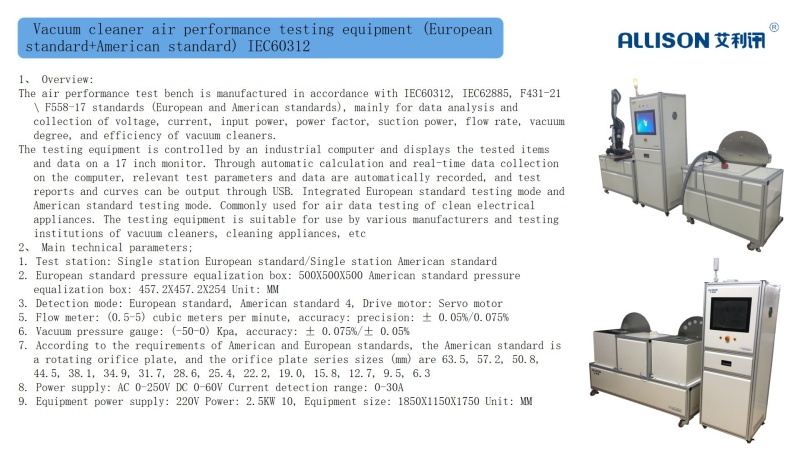
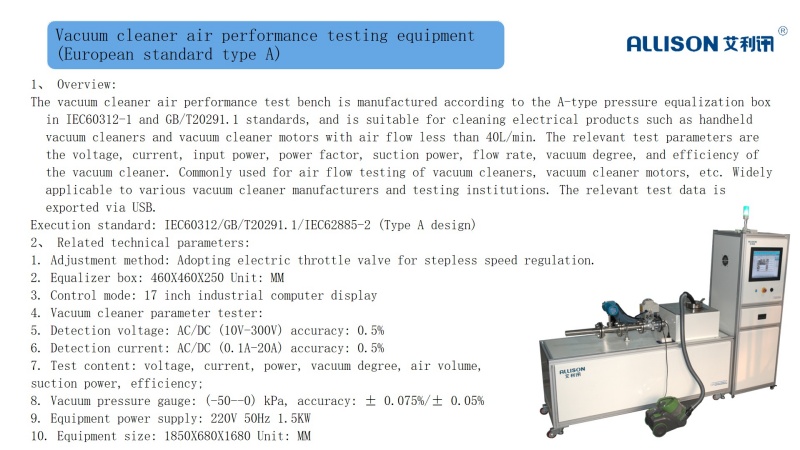
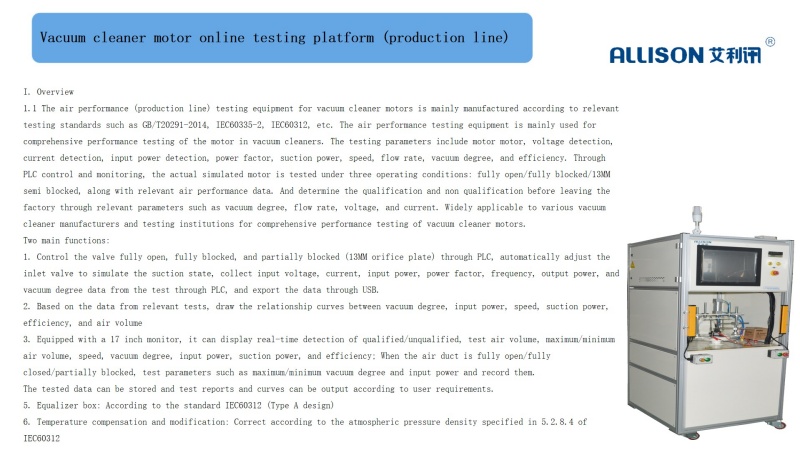
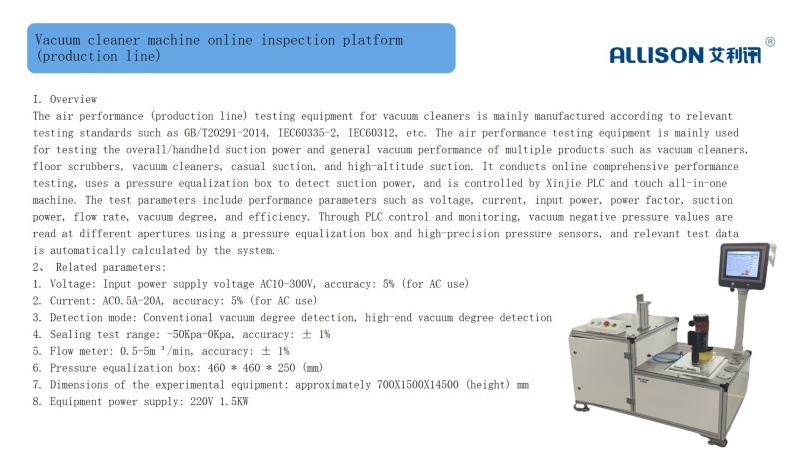
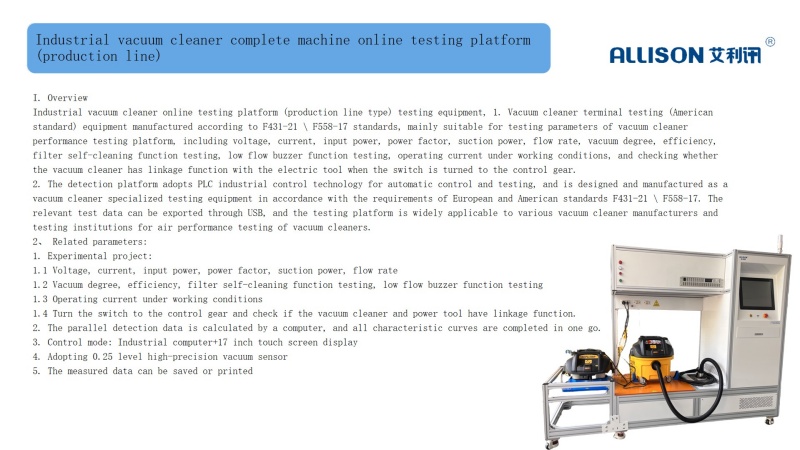
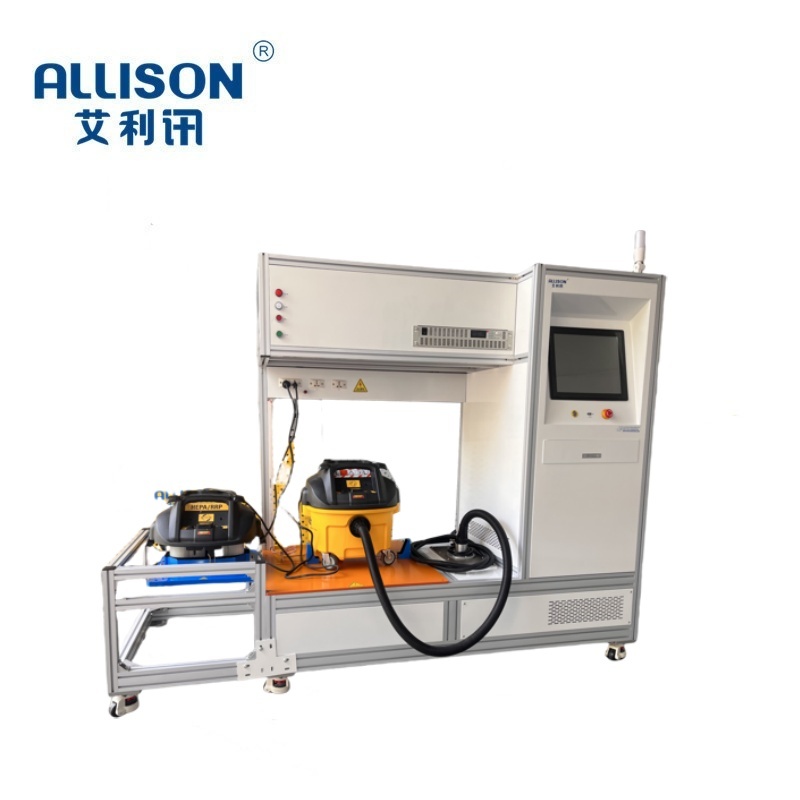
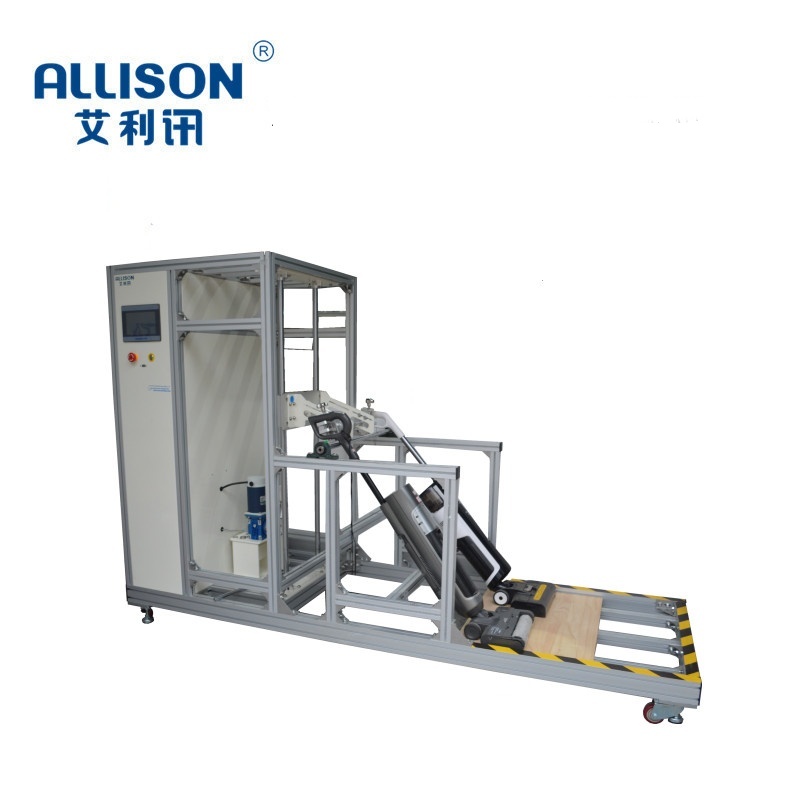
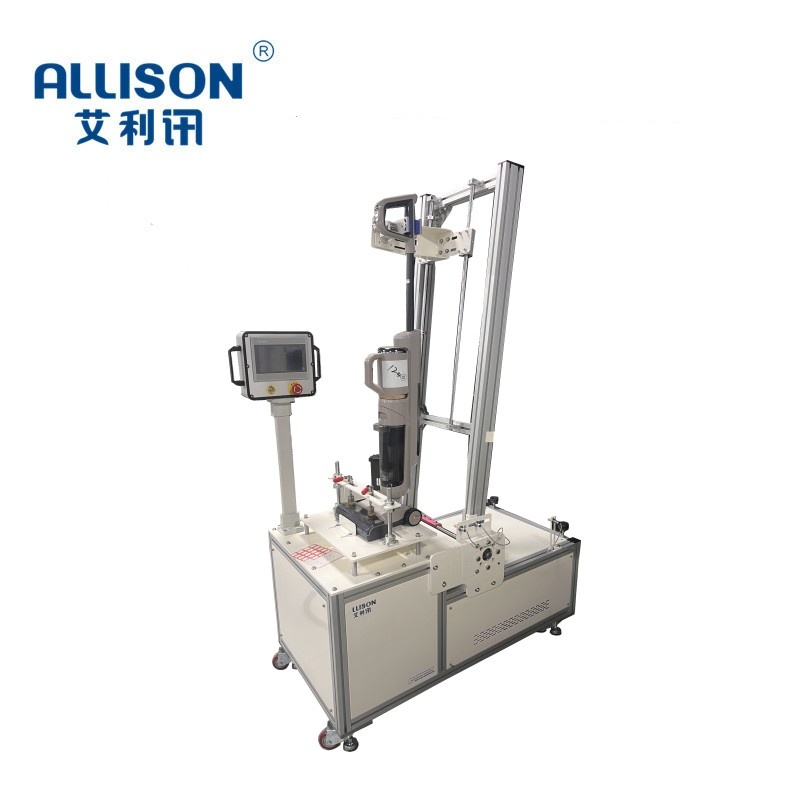
1. The vacuum cleaner buzzing function testing platform is customized according to customer requirements and relevant testing standards, suitable for testing the buzzing function of industrial vacuum cleaners. The testing parameters include electrical parameters, vacuum flow rate, opening threshold angle, vacuum degree, efficiency, etc. The air conditioner adopts a self-developed control system for program control and testing. It is designed with an A-type pressure equalization box that comprehensively refers to the relevant standards of the national standard and the European standard IEC60312. The manual valve can be opened and closed at different angles through manual stepless adjustment. PLC program control is used, and the relevant test data can be exported through USB. The testing platform is widely used for air performance testing of vacuum cleaners by various vacuum cleaner manufacturers and testing institutions.
2. The main functions of the vacuum cleaner air performance testing bench are:
2-1. Manually adjust the valve body and control the angle opening to simulate the orifice diameter, and display the relevant negative pressure values in real time through PLC control. Conduct air performance product suction, flow and other air data testing and collection from different angles. Our company independently developed an upper computer data acquisition system, which uses pressure transmitters to collect and save real-time data on input voltage, current, input power, power factor, frequency, output power, flow rate, and vacuum degree of the vacuum cleaner during testing. The relevant test data is exported through USB.
2-. The device adopts a 7-inch touch screen display, which can display real-time test electrical parameters, maximum/minimum air volume, vacuum degree, input power, suction power, and efficiency; When the air duct is fully closed, test parameters such as maximum/minimum vacuum degree and input power and record them.
2-4. The tested data can be stored and test reports and curves can be output according to user requirements.
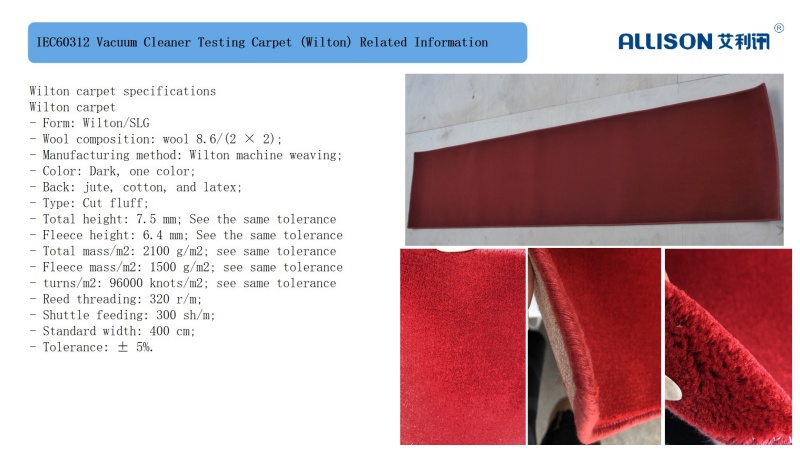
2-5. Equalizer box: According to the standard IEC60312 (Type A design)
2-6. Temperature compensation and modification: Correct according to the atmospheric pressure density specified in 5.2.8.4 of IEC60312









 Online
 Tel
 Contact
 Home