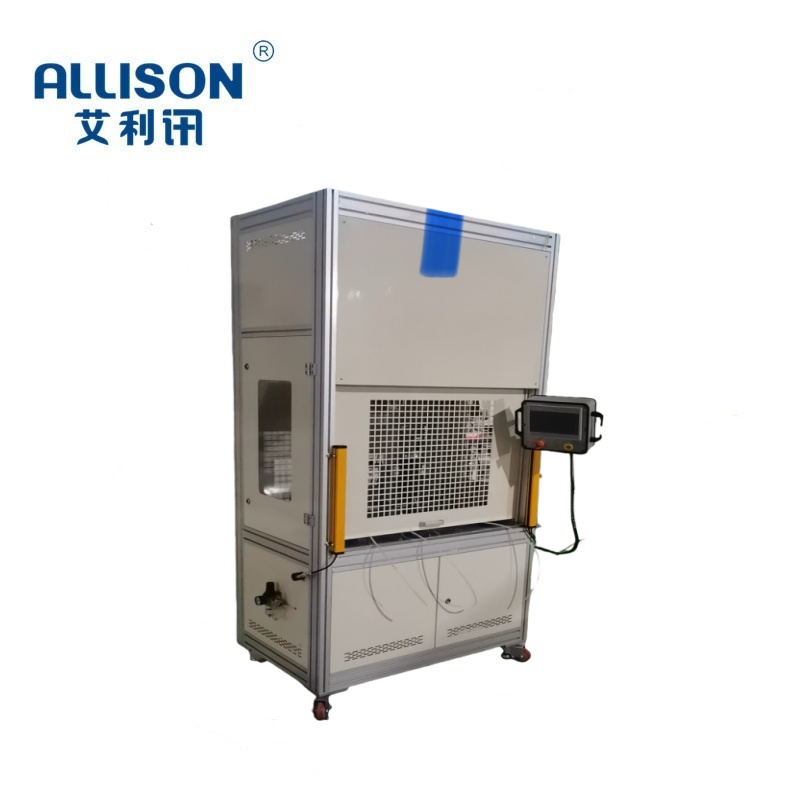
Sealing testing equipment for automotive components, in accordance with BG/- T19949.2 road safety airbags and other relevant requirements. The sealing testing equipment for airbag shock absorbers should mainly focus on air tightness testing, pressure resistance testing, displacement distance testing, etc. for high-precision and high-pressure automotive parts. According to the main testing of product sealing performance and pressure resistance. Through PLC monitoring, there are detection modes such as tightness testing, pressure resistance testing, and gradually increasing pressure. The relevant data in the test can be displayed through digital and curve displays. Data recording function and product data analysis capability. The system operation is simple, and the accessories used are imported and well-known domestic brands, ensuring stable and reliable operation
testing standard
-GB/T 13061-2017 (Air springs for commercial vehicle air suspension)
-GB/T 9012-2018 (Test Method for Airtightness of Airbag Products)
-ISO 5678:2020 (Assessment of Airtightness of Road Vehicle Airbag Systems)
Key testing conditions for equipment
1. Environmental conditions: temperature 23 ± 5 ℃, humidity 45% -75% (standard laboratory environment)
2. Test medium: Dry compressed air/nitrogen (purity ≥ 99.9%)
3. Test pressure:
-Conventional: 1.0-1.5 times the working pressure (commonly 0.4-0.8MPa)
-Enhancement: 1.3 times the standard internal pressure (GB/T 13061)
4. Time parameters: inflation 10-30 seconds | holding pressure 30-30 minutes | detection 10-30 seconds | exhaust 2-5 seconds
5. Determination threshold: pressure drop ≤ 0.05MPa/24h; Leakage rate ≤ 0.1bar/10min
Core testing content
1. Static pressure sealing performance
Fill in the specified pressure → maintain pressure and let it stand → monitor pressure decay; Detect micro leaks in airbag body, welds, joints, and oil seals
2. Dynamic cyclic sealing
Simulate reciprocating charging and discharging (5-25Hz)+vibration conditions; Verify long-term sealing stability
3. Quantitative detection of micro leaks
Direct pressure method/differential pressure method/helium mass spectrometry leak detection; Accurately measure leakage rate and locate small leakage points
4. Sealing in high and low temperature environments
-Maintain pressure inside high and low temperature chambers at 40 ℃~85 ℃; Verify sealing reliability under extreme temperature conditions
5. Blasting pressure and structural sealing
Gradually apply pressure until it ruptures; Verify ultimate pressure bearing and joint/adhesive sealing strength





 Online
 Tel
Tel Contact
 Home
Home