1、 Module Overview
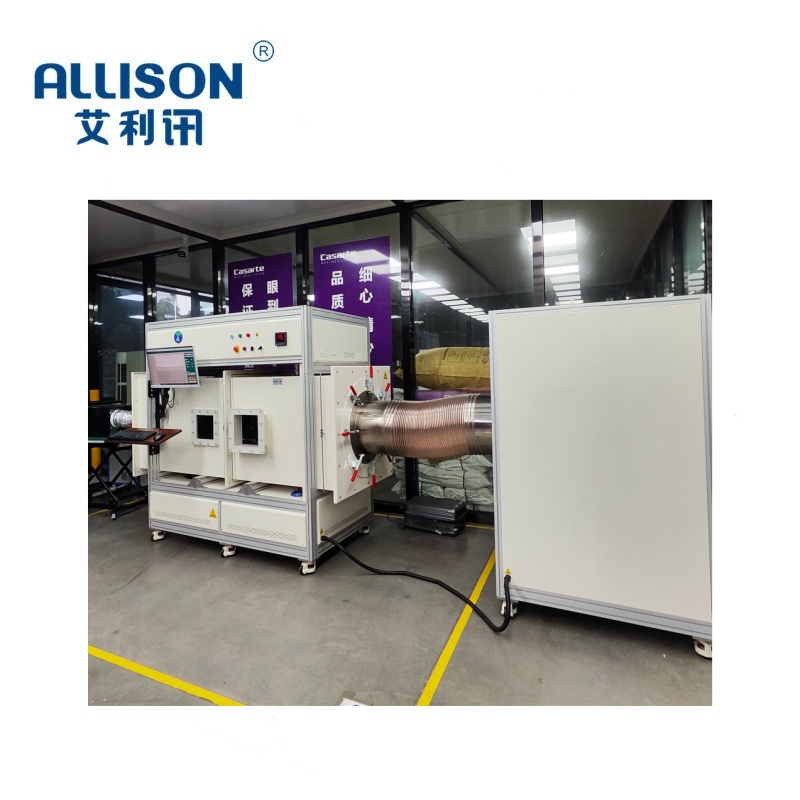
This module is a specialized expansion unit for automotive filters in the chemical filter test bench, which meets the requirements of ISO 11155-1 and ISO 11155-2 for testing gas-phase pollutants in road vehicle cabin air filters. It is specifically designed for automotive air conditioning chemical filters (activated carbon composite filter, molecular sieve deodorization filter, composite VOC removal filter) and can be directly integrated into the main test bench. It shares a set of host data collection and software with the original 0.1-90ppm air distribution system and ISO5 level clean air duct.
ISO11155 focuses on testing target pollutants (toluene, formaldehyde, ammonia, sulfur dioxide, nitrogen dioxide, etc.), specified surface wind speed, temperature and humidity conditions, sampling method, penetration efficiency, and determination of pollutant/adsorption capacity, which is different from ISO10121 for cleanrooms.
2、 Applicable samples
Automotive cabin panel air conditioning filter, composite activated carbon filter, PM2.5+gas-phase composite filter with chemical adsorption layer
3、 Core testing items (ISO11155 requirements)
1. Initial filtration efficiency of target gas-phase pollutants (upstream and downstream synchronous sampling detection)
2. Characteristics of filter resistance and pressure difference under different air volumes
3. Dynamic adsorption breakthrough curve and saturated adsorption capacity
4. Verification of the influence of temperature and humidity on adsorption efficiency under simulated real vehicle operating conditions
5. Intermittent on-off test (simulating vehicle start stop cycle intake)
6. Particle synchronous testing (optional, ISO11155 also includes particle segment requirements)
4、 Module composition
1. Standard fixture for car filter cartridge
Adapt to mainstream car filter sizes in the market (210 × 180, 240 × 190, 280 × 220, etc.), seal the frame to prevent bypass leakage (ISO11155 strictly controls bypass leakage); Support quick sample changes.
2. Standard surface wind speed control subunit
Match the test surface wind speed specified in ISO11155: 0.25 m/s (standard operating condition), which can be accurately adjusted between 0.1~0.8m/s, with closed-loop air volume control.
3. Precise control section for temperature and humidity under working conditions
According to standard requirements: 23 ℃± 2 ℃, 50% RH ± 5% RH reference condition; It can also be extended to high temperature and high humidity (simulating the interior environment of a car in summer).
4. Dual synchronous sampling manifold (ISO sampling structure)
Upstream and downstream symmetrical sampling probes, isokinetic sampling, to avoid concentration sampling deviation; All pipelines are made of PTFE low adsorption material to prevent VOC/acidic gases from being adsorbed by the pipelines and causing false high data.
5. Operating cycle control unit
Programmable intermittent intake, start stop cycle, simulate intermittent opening of vehicle air conditioning, and conduct accelerated aging/life penetration tests.
6. Standard algorithm software package (ISO11155 specific)
Built in ISO11155 calculation formula, automatically outputting report templates; Automatically distinguish between particle filtration efficiency and gas-phase chemical adsorption efficiency.
5、 Key technical parameters
Test surface wind speed: 0.10-0.80 m/s, closed-loop control, accuracy ± 0.02 m/s
Standard test surface wind speed: 0.25 m/s (as specified in ISO11155)
Suitable sample size: customized according to needs, compatible with mainstream car air conditioning filters
Test gases: toluene, formaldehyde, NO ₂, SO ₂, NH ∝ (target gas can be added as needed)
Concentration using host range: 0.1-90 ppm
Differential pressure range: 0~1000Pa (vehicle filter resistance is generally low)
Temperature control: 18-40 ℃; Humidity control: 30% to 80% RH
Leak verification: Comes with a bypass leak self-test program
6、 Test Procedure (ISO11155 Standard Procedure)
Install the tooling into the vehicle filter, seal it, set the standard wind speed, temperature and humidity, preprocess the clean air duct of the host, stabilize the
target pollutant concentration in the gas distribution, collect the upstream data, continuously pass the gas through the filter, continuously sample and record the
concentration downstream, record the pressure difference and concentration curve in real time, calculate the initial efficiency of the software according to the ISO
formula, draw the penetration curve, automatically stop the test when the penetration threshold is reached, and generate a standard report.
7、 Module features
Independent and pluggable expansion module, the original chemical filtration test bench can be upgraded without the need to redo the entire equipment
Strictly matching ISO11155 sampling, wind speed, and operating conditions specifications, it can be used for third-party inspection and R&D type testing
Low adsorption gas path, optimized for organic gases and acidic gases, reducing system background adsorption errors
Software distinguishes between car filter report templates and cleanroom ISO10121 templates, with one click switching
Can stack particulate matter dust generating units and conduct particle+gas phase composite testing simultaneously
8、 Optional Expansion
Particle dust generation module (ISO11155 particle part, NaCl/DEHS)
UV aging front cabin (simulating the degradation of adsorption performance after aging under indoor light)
Multi station automatic switching tooling, batch comparison of different formula activated carbon filter cartridges





 Online
 Tel
 Contact
 Home