1.1 The refrigerator type testing laboratory is used to test the cooling speed, freezing capacity, power consumption, and other performance of refrigerators and freezers Under the conditions of temperature, humidity, and airflow direction that are close to the actual use of refrigerators and freezers, the testing system conducts various tests on refrigerators and freezers. Through a self-developed control system, the temperature parameters inside the testing refrigerator and freezer in the testing room are monitored and analyzed throughout the entire time history, and real-time data recording is carried out.
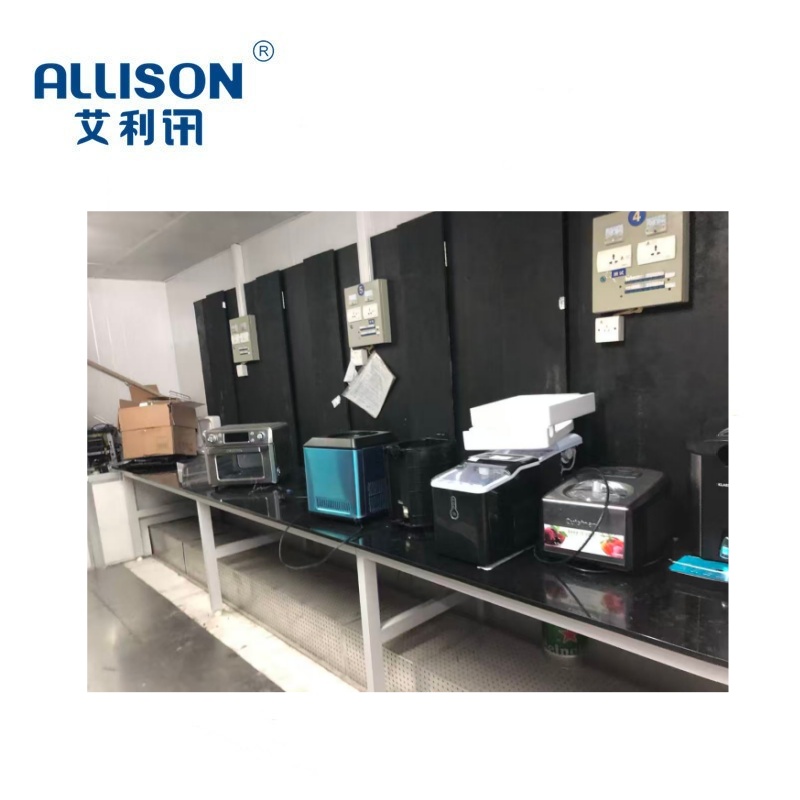
1.2 The testing room complies with relevant testing standards: it runs tests on portable heating and cooling boxes under simulated environmental conditions, including storage temperature testing and energy consumption testing. Adopting the company's independently developed control system, with a 17 inch display screen. Integrate into the testing environment control, collect relevant testing data such as voltage, current, electrical energy, temperature, etc. for testing products. Independently collect and monitor data from each workstation while controlling the corresponding temperature and humidity environment. Each workstation can synchronously adjust voltage and frequency, with a voltage regulation range of 0-250V, and an external variable frequency power supply (provided by the customer). Each workstation is equipped with 15 T-shaped temperature measurement points (temperature measurement channels of adjacent workstations can be borrowed and switched to achieve measurement of 30-60 temperature channels per workstation). Each workstation has 2 national standard universal power sockets (a total of 12), which are electrically independent and can be measured and started/stopped separately. They can also be centrally monitored by the upper computer. The PLC controller control interface is simple and easy to operate, with fault self diagnosis prompts and the ability to store fault alarm records. The equipment has protective devices for abnormal conditions such as temperature, pressure, water level, voltage, and current. The electrical safety design complies with relevant national standards.





 Online
 Tel
 Contact
 Home